


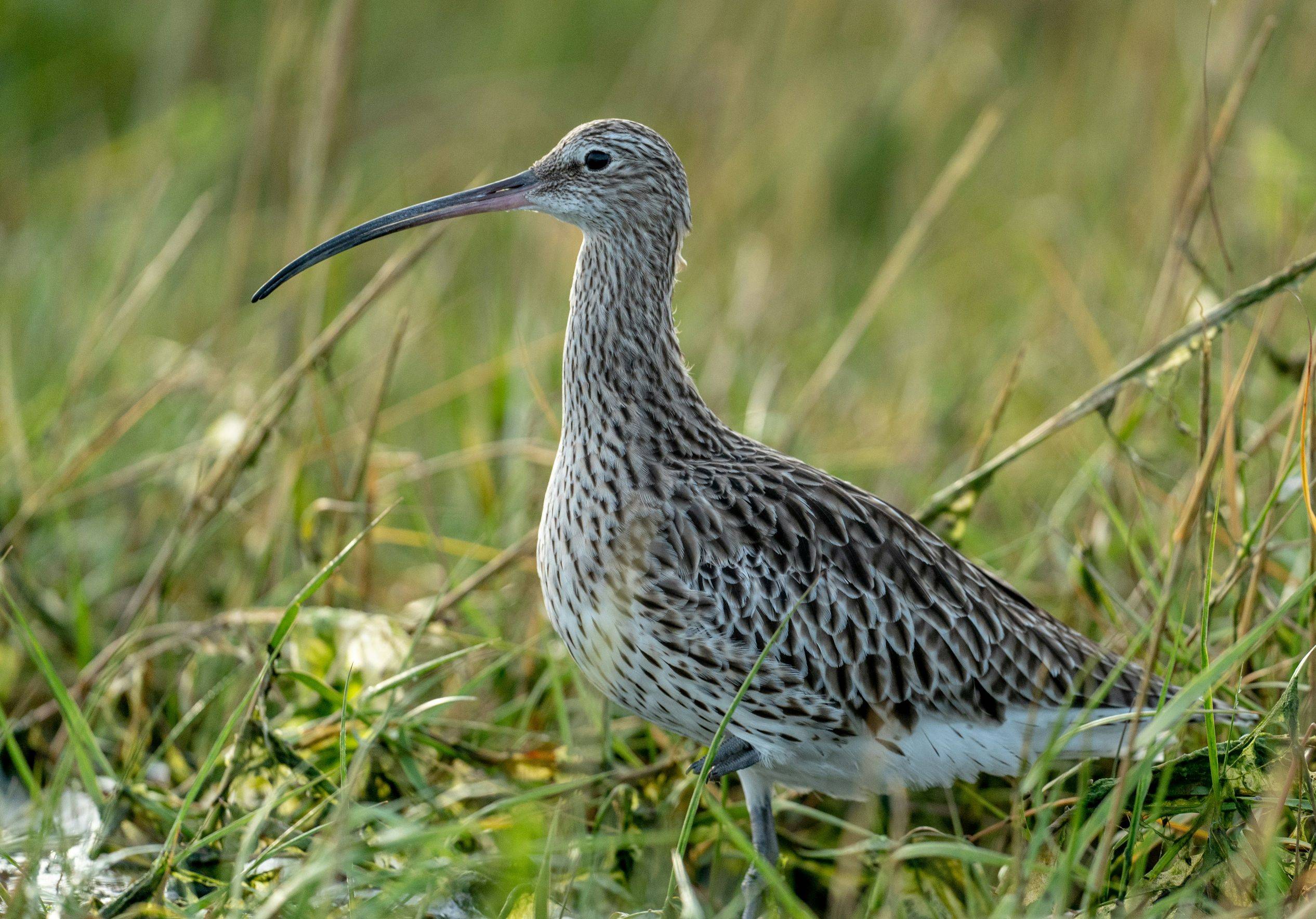
19 Nov BSG Ecology lead data collection project to inform Curlew Conservation in Wales

BSG Ecology recently completed a GIS-led project to source, standardise, collate and issue Wales-wide data held by renewables developers on breeding curlew (and other waders) to inform Natural Resources Wales’s (NRW) ongoing efforts to drive curlew recovery.
Curlew are Wales’s most pressing conservation priority. The species is in steep decline throughout the UK, but breeding numbers are dropping most rapidly in Wales. The Curlew Recovery Plan for Wales was published in 2021 and established a network of Important Curlew Areas in Wales. It also identified the critical need for funded land management projects to benefit curlew, to raise awareness of the plight of curlew with farmers and in rural communities, and to monitor both the success of local initiatives and the wider breeding curlew population in Wales in a structured manner.
Limitations in terms of budget and fieldworker resource inevitably dictate that not everywhere can be covered, and informed decisions will have to be made about where to direct effort most appropriately.
NRW had therefore approached BSG Ecology to see if there was a way to access recent wader data collected to inform renewable energy development projects. Onshore wind and solar farm proposals typically collect high quality data on breeding birds, as standardised methods of data collection are applied and surveys are completed by experienced fieldworkers. There was an opportunity for NRW to target available resources at areas without coverage if existing recent data could be provided. The collation of existing data was led by BSG Ecology GIS consultant Sophie Logan.
The project resulted in the collation, standardisation and provision of GIS data for over 700 square kilometres of land. It was sourced from 53 proposed wind and solar projects, with information provided including wader territories / null results, area surveyed, technique employed and number of visits. The information received will be used to inform the approach taken to an NRW-led wader survey in 2026 aimed at understanding the current distribution and population size of breeding waders.
Jessica Hooper, Director of RenewableUK Cymru said:
“This kind of collaboration is hugely important given the short time we have left to act. By sharing rigorous ecological data already collected for project planning, developers have enabled NRW to cover more ground, more quickly, and at no extra cost to the taxpayer. It shows how the private and public sectors can work together to help conserve species at risk.”
Bethan Beech, Specialist Advisor for Terrestrial Species Recovery at Natural Resources Wales, commented:
“The data provided by RenewableUK Cymru is being used by NRW during the planning phase of the 2026 Wales Wader Survey. Having access to this information enables NRW and its partners to concentrate survey efforts in areas that have not been monitored for curlew or other wader species in recent years. This collaborative approach supports our commitment to nature recovery and evidence-based decision-making, as outlined in NRW’s corporate plan.”