News & Views

There is currently considerable uncertainty as to the extent to which bats migrate in and out of the UK from Continental Europe, although many experts in UK bat ecology consider that some degree of migration occurs.  Small scale research studies, development-related survey at coastal sites and records of bats on vessels and offshore oil rigs have provided indications that migratory movements occur in spring and autumn.  However, this gap in current knowledge does not appear to be being addressed through strategic studies.
Working in conjunction with Hanson Aggregates Ltd and the RSPB, BSG Ecology staff have created an otter holt at a gravel pit in Oxfordshire. The site has been chosen by the RSPB as a Nature After Minerals case study site, and is in the process of restoration.
Post-construction monitoring has been undertaken at wind farms in the UK for many years, and is now routinely requested for many multiple-turbine schemes.  Despite this, relatively few UK monitoring studies have contributed significantly to our understanding of the ways in which birds and bats may be impacted by wind farm developments: for example with regard to the collision and displacement of birds, information still has to be pieced together using a wide range of sources.
Tree climbing surveys (sometimes known as aerial inspection surveys) are an effective way to assess a tree’s potential to support bats. This technique, which uses access skills borrowed from tree surgery, is far more definitive than ground-based survey, and can be very cost-effective.
Over the last few years BSG Ecology has provided ecological support to a heritage lottery-funded project aimed at restoring Whitecliff Furnace, a Scheduled Ancient Monument near Coleford in the Royal Forest of Dean.  Our work to date has included detailed bat surveys to inform working methods which allowed the stabilization of the main furnace flue and re-pointing of masonry, whilst avoiding the need for a European Protected Species license.
Dr Peter Shepherd and Owain Gabb were invited by the Planning Inspectorate to give presentations on ecological issues arising from wind energy proposals to a two day conference of planning inspectors in Bristol on the 24th and 25th January 2013. The presentation covered the range of ecological issues that have featured at planning inquiries into wind farm developments between 2005 and 2010, but focused primarily on issues relating to impacts on bats and birds.
Wildlife legislation and licensing requirements can often lead to a relatively standard suite of ecological surveys being undertaken to support planning applications.  However, in some cases, non-standard surveys can be very helpful in increasing confidence in the conclusions of an assessment, informing mitigation strategies and securing licences. 
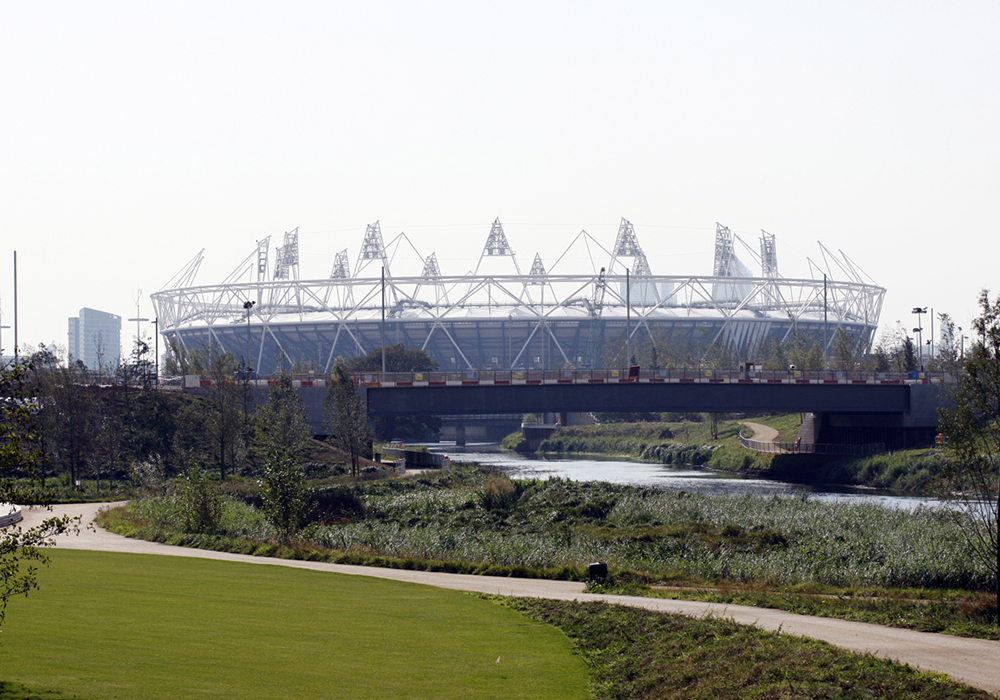
Between 2008 and 2012 BSG Ecology was retained as the ecological advisor to the design team of LDA Design-Hargreaves who prepared the designs for the Parkland and Public Realm areas of the Olympic Park in East London. In this interview , which is one of a series of 10 interviews, Peter describes the role BSG Ecology had in the development of the Park designs and the integration of the Olympic Park Biodiversity Action Plan objectives.
The recent autumn IEEM conference in Cardiff (7-8 November) had a theme of ‘Renewable Energy and Biodiversity Impacts’. Senior Ecologist Matt Hobbs gave a presentation on applying the BCT Guidance on surveying for bats at onshore wind farms, for which he is the lead author. The presentation introduced and set out the rationale of the guidance, as well as some of the detailed methods that it includes. More challenging issues were also tackled, such as when to collect data at height and when and how to correlate weather data to recorded bat activity, to inform wind farm curtailment schemes
BSG Ecology is exhibiting at Stand 67 of Renewable UK, Glasgow between 30th October and 1st November 2012. The conference is at the Scottish Exhibition and Conference Centre (SECC), Glasgow and will address policy, development and technical aspects of UK onshore and offshore wind energy, wave and tidal energy.
Senior Ecologist Matt Hobbs will present a talk to the IEEM Autumn Conference in Cardiff on the subject of the Bat Conservation Trust’s onshore wind farm guidance.  Matt’s talk will take place on Wednesday 7 November, and is entitled “Bat Surveys for Wind Farms – Best Practice.”