



Overview
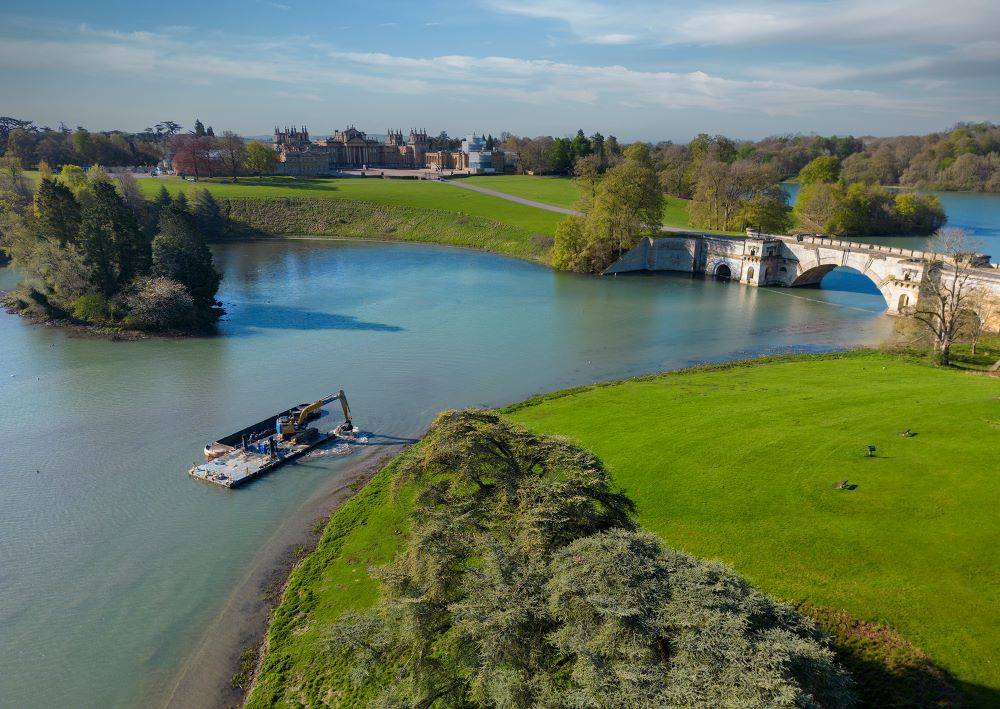
BSG Ecology have delivered ecological support over the last 10 years to Blenheim Palace during the ecological restoration of their lake. BSG Ecology was involved in early survey and water sampling work to understand the ecological condition of the lake, had design input to the restoration process, and has carried out work to protect species using the lake from harm during the works, including nesting birds, water voles, and badgers. Dredging work is now complete, and Blenheim Lake shows encouraging signs of returning to a better ecological condition, to benefit the wider biodiversity of Blenheim Park.
Challenge
In 2014 BSG Ecology was commissioned to design and undertake a suite of ecological surveys to support the proposed restoration of the lake at Blenheim Palace, in Oxfordshire. There has been gradual decline in the quality of the lake which was classified by Natural England in 2014 as “unfavourable and declining.” Blenheim Palace wanted to restore the lake to its original 18th Century design as part of its Capability Brown landscape – an important part of what makes Blenheim a World Heritage Site. The restoration was also to retain the Site of Special Scientific Interest (SSSI) status of the lake.
The lake is one of the largest areas of open water in Oxfordshire and of regional importance for breeding and over-wintering migratory waterfowl such as gadwall, great crested grebe, pochard, tufted duck, mallard, shoveler, and teal. Its gradual decline over the last few decades has made it less suitable for the bird assemblage the SSSI was notified for.
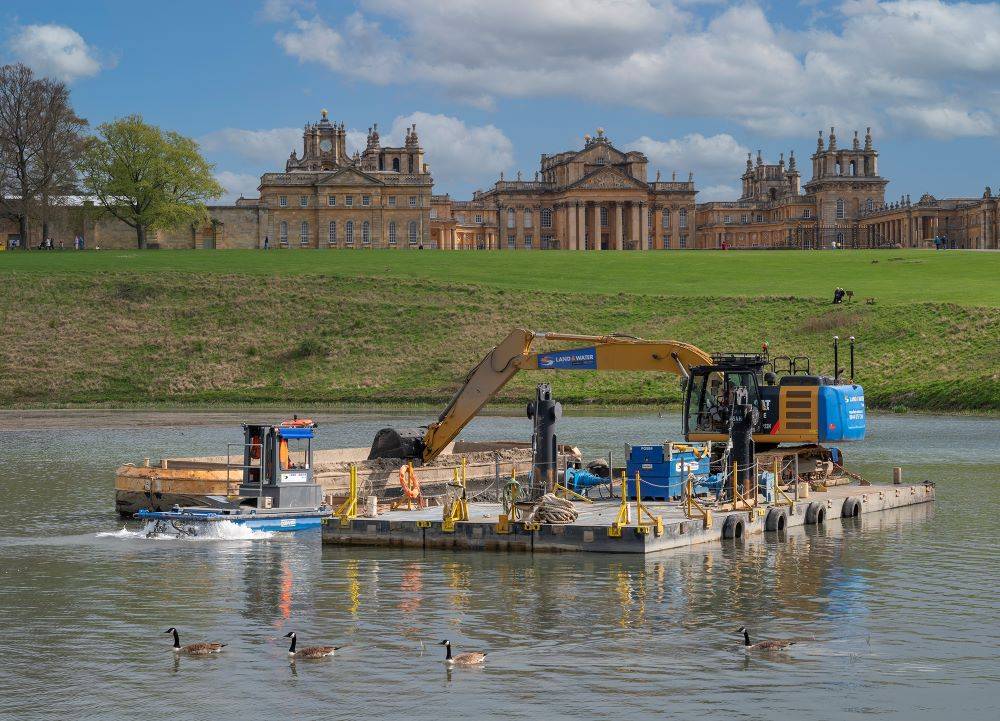
Initially, BSG Ecology carried out water and macroinvertebrate sampling to assess the ecological quality of the lake. It was found to be in unfavourable ecological condition due to high nutrient levels and a deep silt layer, likely to be limiting its biological diversity and ecological function. Removal of the deep silt layer through dredging was considered necessary to improve the lake’s ecological condition. The lake was dredged without emptying it (a ‘wet dredge’) in 2022-2023.
Solution
BSG Ecology provided on-site supervision and licensing support, liaising daily with the contractors and engaging with local interest groups and individuals in order to minimise impacts on biodiversity and address concerns raised.
Water voles were found to be using the lake and BSG therefore applied for and worked under a licence from Natural England to translocate animals from the works areas to avoid harm during the dredging.
It was found that otter was using the lake regularly for fishing, but no holts or resting places (which are also protected) were found before or during the works. BSG Ecologists regularly undertook checks for otter holts and resting places whilst on site (to inform the need for licencing).
An active badger sett was found in proximity to the lake, though no works which would lead to damage of the sett was required. Therefore, no licence was required and the sett was safely cordoned off so badgers would not be disturbed by the works.
Several bat species were found to be using the Grand Bridge for roosting. The internal structure of the bridge contains a labyrinth of rooms which created a significant barrier to noise disturbance. The short-term nature of the works in the vicinity of the bridge, along with the thick stone walls of the bridge enabled the works to take place without a licence.
Nesting birds
Blenheim Lake is home to a wide variety of breeding bird species, including ducks, herons, terns, waders, geese, and several warblers. Due to the scale of the project, it was not possible to avoid works during the nesting bird season, so BSG Ecology worked throughout the season to carry out ecological checks, monitor nesting, and provide advice on measures to prevent damage or disturbance. This involved dynamic monitoring and mapping of nest locations to ensure that the restoration could be undertaken as efficiently as possible whilst avoiding disturbance to nesting birds.
Experienced ornithologists at BSG Ecology attended the Site regularly, e.g. through morning nesting bird checks, carried out from both the lakeside and by boat using binoculars. Any new nest locations or advice on works restrictions was communicated to the dredging contractor, Land & Water Group, this ensured that the works team had accurate and up to date information. On the ground, radios were used by the ecologists to communicate directly with the works team, providing live and dynamic ecological support.
Public gaze
Blenheim Park is a publicly accessible SSSI and is a popular location for local natural history interest groups. The lake restoration was a high-profile project, carried out in a popular and publicly accessible location. The restoration works were therefore carried out under the close scrutiny of members of the public, local natural history groups, and local media. BSG Ecology engaged with these local groups and opened and maintained lines of communication with them to ensure the best outcome for nesting birds. BSG communicated with and explained to these stakeholders the ecological value of the work and the precautions being taken, to allay their reasonable concerns. This was an important component of our works, since dredging works can appear dramatic and alarming.
Outcome
BSG Ecology worked closely with Blenheim Palace and Land & Water Group to deliver tailored and dynamic ecological solutions to a project spanning 10 years, involving many other stakeholders. The dredging work is now complete, and Blenheim Lake shows encouraging signs of returning to a better ecological condition, with enhanced biodiversity and ecological functioning, including its value as bird habitat.
Testimonials
“Working with BSG ecology on our lake dredge project has been nothing short of exceptional. Their dedication and tireless efforts have been instrumental in ensuring the success of the project while prioritizing the preservation of the local ecology and biodiversity.
BSG’s dedicated team consistently went above and beyond, making themselves available at a moment’s notice and working closely with both the local community and birdwatchers to address concerns and ensure a harmonious outcome. Their expertise and collaborative approach not only ensured the continued efficiency of the project but also fostered a deeper appreciation for the delicate balance between necessary intervention and environmental conservation.”
Kelly Whitton, Head of Built Heritage, Blenheim Palace
“Natalie Sabin from BSG Ecology worked with Land & Water Services throughout the project to ensure the interests of all the wildlife were at the forefront of the dredging team’s operation. Natalie’s approach was practical and through a process of tool box talks and monitoring allowed this complex project to proceed along side nature”
Charlie Oakes, Contract Manager, Land & Water Group
All photos courtesy of Blenheim Palace