



27 Apr Sharing Learning & Good Practice: A Day of Practical Conservation at Kielder Forest

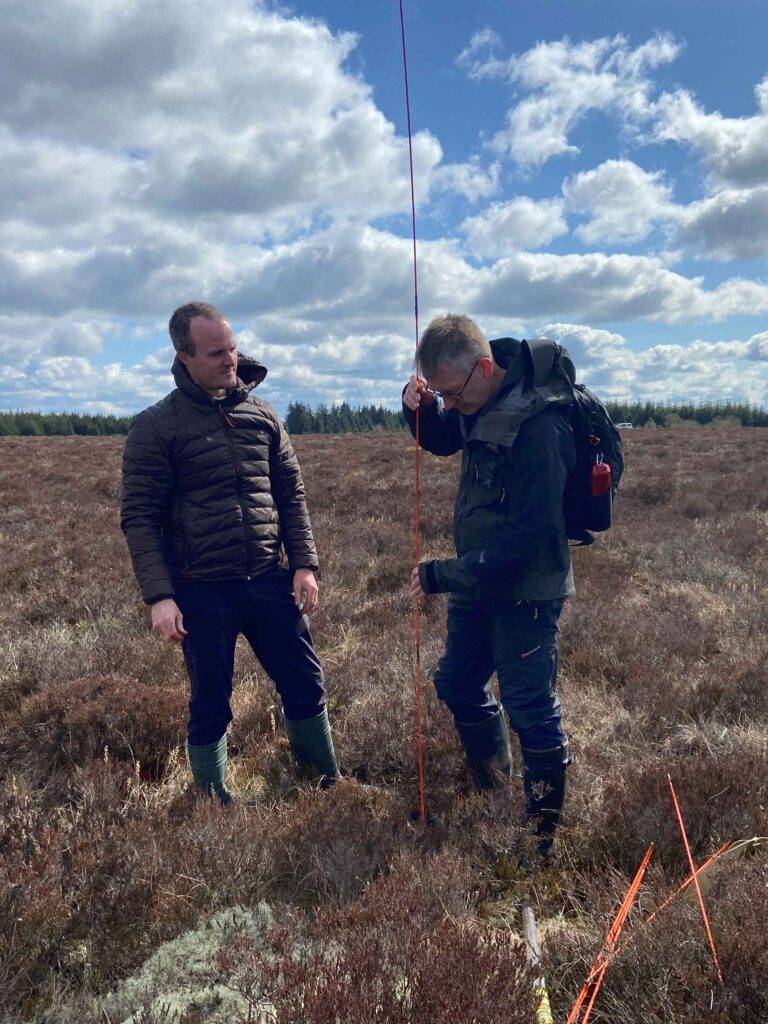
The Newcastle team recently spent an enjoyable day at Kielder Forest in Northumberland learning how the Border Mires are being restored, combined with some hands-on practical conservation. The day was led by Richard Guy, Peatland Restoration Project Manager for Forestry England (Northern district).
Kielder Forest is the largest planted forest in the UK, covering an area of approximately 65,000 hectares, between 10-20% of Kielder is maintained as open habitat. The Border Mires is a collection of peat bog sites in and adjacent to Kielder. The Border Mires blanket bog are nationally and internationally important ecosystems, largely consisting of deep peat with intact hydrology and peat-forming vegetation.
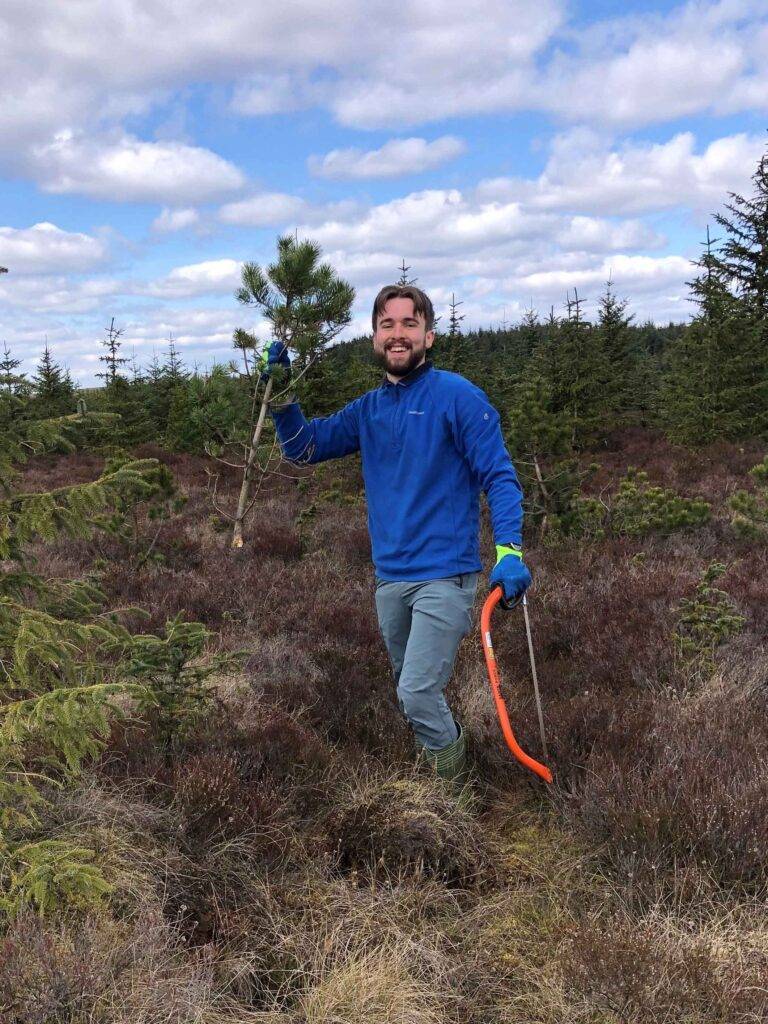
The two main challenges affecting the condition of the Mires are poor hydrology and tree regeneration. Hydrology is key to a functioning ecosystem and peat soil must be waterlogged to prevent oxidation and decomposition. The team were able to see examples of dams which have been installed within the Mires in order to maintain the integrity of the bog. Fast-growing coniferous trees also present an on-going challenge as they extract moisture from the peatland, as well as shading out Mire vegetation. Equipped with bow saw and loppers, the Newcastle team spent the afternoon helping to clear tree regeneration on one of the mires. A small contribution, but one which will have a positive impact.
New starter Adam Murphy commented:
“The day out to Kielder Forest was a great way to get to know members of the team as a new starter. It was very interesting to see peat restoration being carried out by the team at Forestry England and to learn more about the methods used to restore these important habitats. The last part of the day involved some hands-on conservation work as we removed young spruce trees which were encroaching on the bog habitat. A dose of healthy competition between the team meant that we were able to clear a large part of the mire of tree cover and do our part to help maintain the important open habitat. It was an enjoyable day out where we were able to learn more about how mires can be restored, spend some time with the team and contribute directly to important conservation work.”
We would like to thank Richard Guy and the Forestry England team for sharing their knowledge of the Border Mires restoration project and for coordinating a wonderful day at Kielder.