



Overview
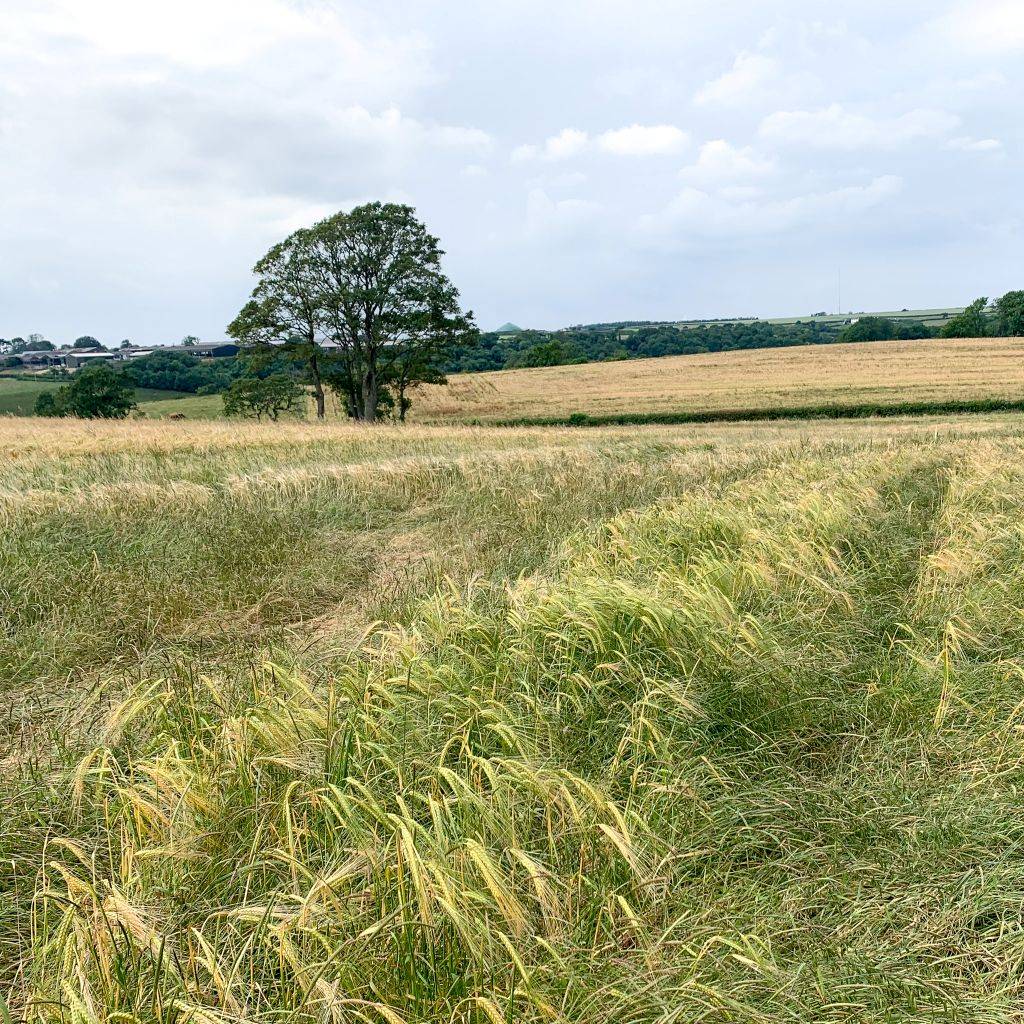
A proposed large solar farm at Pen Onn, in the Vale of Glamorgan required careful infrastructure design and a range of habitat enhancements in order to deliver a biodiversity net benefit as required under Planning Policy Wales (PPW) 12 and the Environment (Wales) Act 2016. BSG Ecology provided support to Iolo Energy through the design and assessment process, with planning consent achieved following a hearing in summer 2025.
Challenge
The main challenges posed by the proposed solar farm were safeguarding protected species through the design, construction and operation of the site, and achieving biodiversity net benefit as required under Welsh planning policy.
Survey work confirmed the presence of territories of barn owl, goshawk and common quail (all of which are afforded enhanced protection from disturbance under Schedule 1 of the Wildlife and Countryside Act 1981) on or within close proximity of the site. A range of farmland passerines were also found to be breeding on the site, including skylark, yellowhammer and linnet, and the presence of hazel dormouse (a European Protected Species) was confirmed within the hedgerow network.
In consultation, the Vale of Glamorgan County Borough ecologist noted concerns about the impact of the scheme and the need for an appropriate biodiversity net benefit solution were it to be consented.
Solution
BSG worked closely with the planners, landowner and the landscape architects to ensure that impacts on the ecological features of the site, particularly the habitats supporting protected species, were avoided or minimised through site design. Measures included the retention of all hedgerows, with the only required works to them involving pruning at existing gate entrances to facilitate access.
Other construction phase controls included completion of work outside of the breeding season in order to avoid disturbance to birds, and practical measures to protect features such as hedgerows during construction.
Habitat enhancement measures aimed principally at benefitting barn owl and farmland breeding birds (through increasing the small mammal, invertebrate and seed resource) included:
- Creation of lightly-managed tussocky grassland margins.
- Sowing of sacrificial cereal crops.
- Conversion of arable fields and improved grassland to more species-rich hay meadow and tussocky grassland.
In addition, there was a commitment to install nest boxes for starling, house sparrow and kestrel (all priority species in Wales) on suitable trees / buildings within the site.
Measures to improve habitat connectivity for dormouse, other protected and priority mammals, herpetofauna and those breeding birds associated with field edge habitats in addition to those listed above included in-filling of gaps using locally-sourced native species and the adoption of a management regime aimed at promoting structural and botanical diversity.
Outcome
A planning hearing held under the Developments of National Significance consenting process was used to explore the key consenting issues with regard to the development. During the hearing, the Vale of Glamorgan County Borough ecologist confirmed that in the view of the authority the scheme had taken account of stakeholder comments and that the biodiversity solution proposed was appropriate.
The solar farm has subsequently been consented. Its installed energy capacity of 45 MW will make an important contribution to renewable energy targets and the reduction of carbon emissions in Wales.
Testimonial
“The expert advice provided by BSG Ecology has been pivotal in securing planning consent for the Pen Onn Solar Farm development. BSG have expertly navigated the team through the many complex challenges presented, including a skilled approach to formulating a long-term ecological management strategy and agreeing a scheme of net benefit for biodiversity in liaison with key consultees. Their knowledgeable, pragmatic and highly responsive approach has ensured a successful outcome at the examination hearing.” Catherine Blyth, Asbri Planning