



Overview
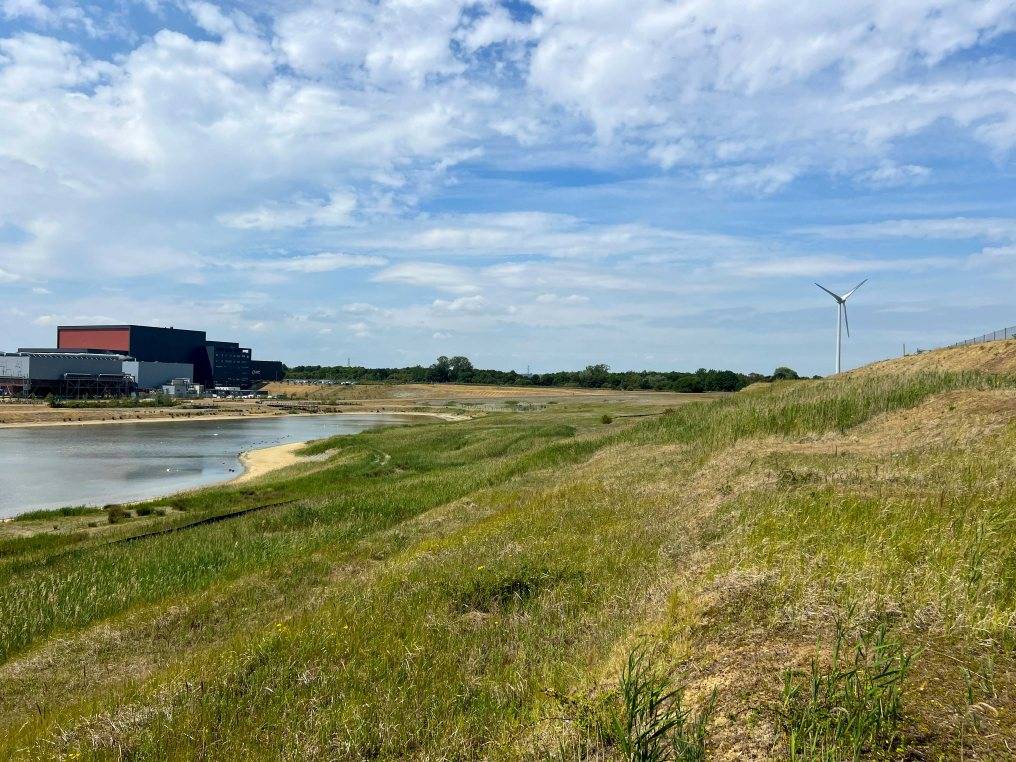
BSG Ecology have worked at Rookery Pit since the 2000s and have provided ecological support to the now operational Encyclis Rookery South Energy Recovery Facility (ERF) from its inception. The ERF is a state-of-the-art plant able to process 657,000 tonnes of residual waste every year, reducing landfill, generating electricity and recovering valuable resources and by-products for reuse. BSG has provided support to the project including baseline survey work, the production of the Ecological Impact Assessment, work to enable condition discharge, and post construction ecological monitoring. The Site is located adjacent to several sites of conservation value, including the Rookery Clay Pit County Wildlife Site (CWS) and is adjacent to the Stewartby Lake CWS.
Challenge
Following permission in 2011, a set of requirements were imposed on the scheme to allow it to proceed. This included the preparation and submission of an Ecological Management Scheme (EMS). The EMS was prepared by BSG Ecology in 2016 and outlined a number of method statements setting out enhancement and mitigation measures aimed at delivering significant ecological enhancements for notable species of invertebrates associated with brown field habitats and avoiding impacts to existing features used by a range of foraging bats, including species which do not tolerate artificial light shed.
Solution
Habitat retention, enhancement and creation focused on three key areas:
- Retention of approximately 1.2 ha of brownfield habitats (Open Mosaic Habitat) on the northern slopes of the South Pit and creation of two brown roofs (approximately 450 m2) on the new ERF buildings with associated monitoring of the developing invertebrate community.
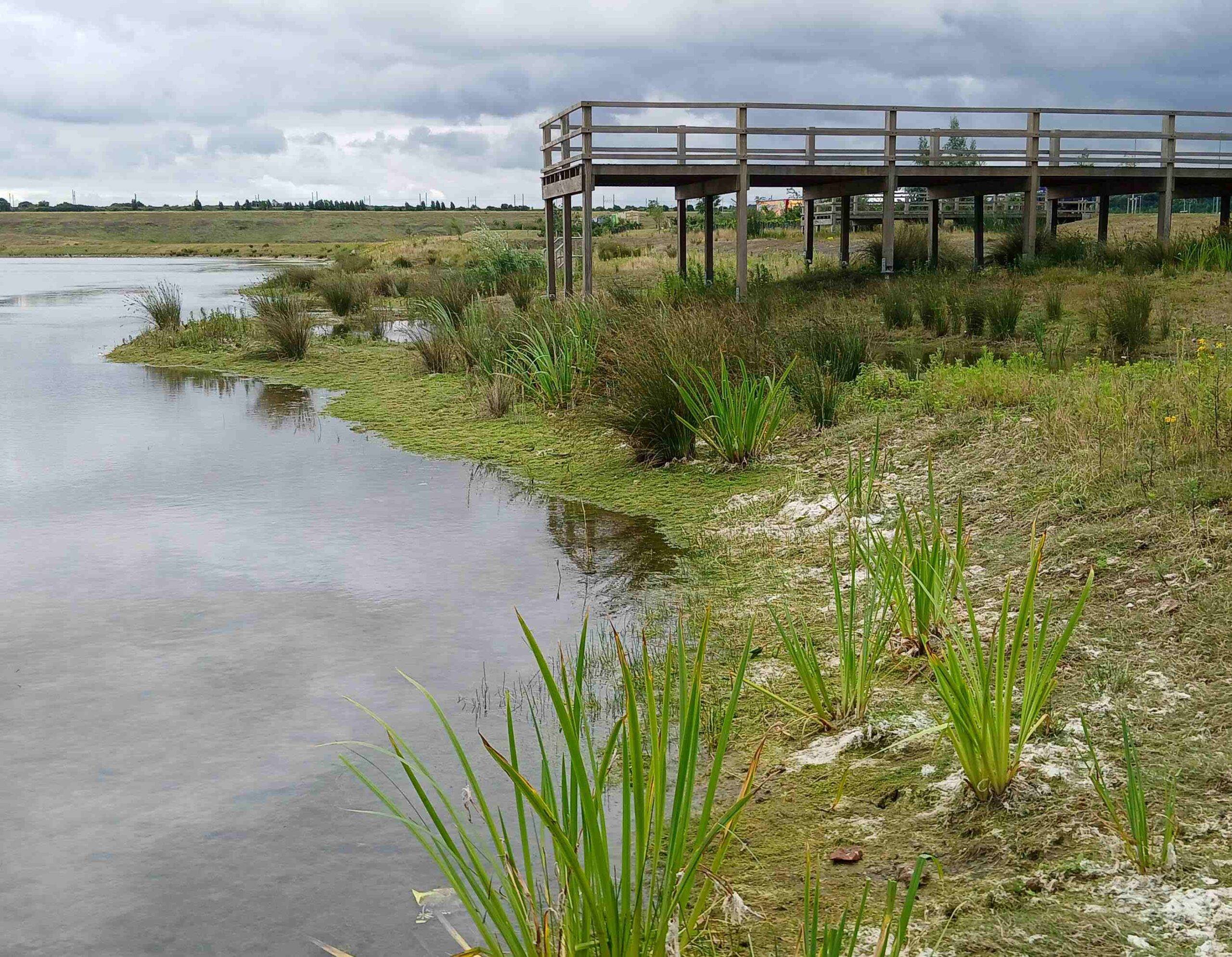
- Monitoring of invertebrates and vegetation establishment in the newly created attenuation basin.
- Retention and protection of the existing good quality foraging habitats associated with the access road as a dark corridor feature along the western edge of the North Pit.
- Installation of bird nest boxes and bat boxes in retained habitats.
BSG has monitored the creation and enhancement measures since 2019. This has included monitoring of the retained brownfield habitats on the northern slopes of the South Pit against habitat-based monitoring targets. These targets include the extent of cover of several types of habitats including bare ground, scrub, grassland and some reedbed. Monitoring of the invertebrate community on the newly constructed brown roofs and of the aquatic invertebrates in the new attenuation basin is also being carried out.
The habitats associated with the access track were identified in the EcIA as a potentially important corridor for bat species which are not typically tolerant of artificial light levels, including brown long-eared bat, Myotis species and barbastelle bat. The design of the ERF therefore took this into account, and no lighting was included in the final scheme along the access road (other than at the junction with Green Lane) and no artificial lighting was used here during the construction phase.
Outcome
Monitoring using automated bat detectors over a five year period has shown a continued presence of species around the access track and adjacent habitats, indicating that there has been no detrimental effect on the diversity of the bat community thanks to the sensitive design. Bird nest boxes and bat boxes have also now been installed along this corridor.
In 2024 and 2025 monitoring on the brown roofs and of the attenuation basin revealed that the invertebrate community has started to establish with several nationally rare and nationally scarce species recorded including the broad-banded hopper wasp Gorytes lactinctus, six-spotted wasp-cuckoo Nysson trimaculatus and diving beetle Hygrotus nigrolineatus.
BSG Ecology continue to provide ongoing ecological support to the scheme to ensure that the habitat creation and enhancement measures are fully realised.