




Overview
BSG Ecology was commissioned by RWE to undertake ornithological and ecological assessment for the proposed six turbine Abertillery Wind Farm.
BSG completed desk study, detailed ornithological and ecological survey work, liaised with stakeholders and responded to their comments and concerns. BSG also wrote the ecological and ornithological impact assessment chapters of the Environmental Statement, produced an Outline Habitat Management Plan, inputted to the Green Infrastructure Statement and provided responses to PEDW on all ecological and ornithological issues raised by stakeholders prior to determination of the application.
A planning application for the scheme was submitted in October 2024. Planning permission for the scheme was refused in March 2026 due to cultural heritage and landscape issues; the Inspector concluded that the Habitat Management Plan proposed would have resulted in the scheme achieving biodiversity net benefit.
Challenge
The wind farm was proposed for an area of upland unenclosed common land that largely comprises dry heath, acid grassland and bracken-dominated slopes with small areas of modified bog and wet heath habitat. The site spans the border of the county boroughs of Torfaen and Blaenau Gwent.
The potential ecological challenges to the project included designing a program of baseline ornithological and ecological survey work that took account of species susceptible to wind farm collision (birds and bats), disturbance (such as otter) and habitat loss (reptiles and the rare and range-restricted Silurian moth). There were also potential Habitats Regulations Assessment (HRA) considerations with regard to the Usk Bat Sites and River Usk Special Areas of Conservation (SAC). Finally, the design of the development needed to evolve to avoid areas of greatest ecological value, reflecting the step-wise approach outlined in Planning Policy Wales, and the need to deliver a biodiversity net benefit solution.
Solution
Consultation through meetings with the relevant local planning authority ecologists, and via formal EIA scoping and pre-application consultation allowed the scope of survey, focus of the assessment and in principle biodiversity net benefit solutions to be explored.
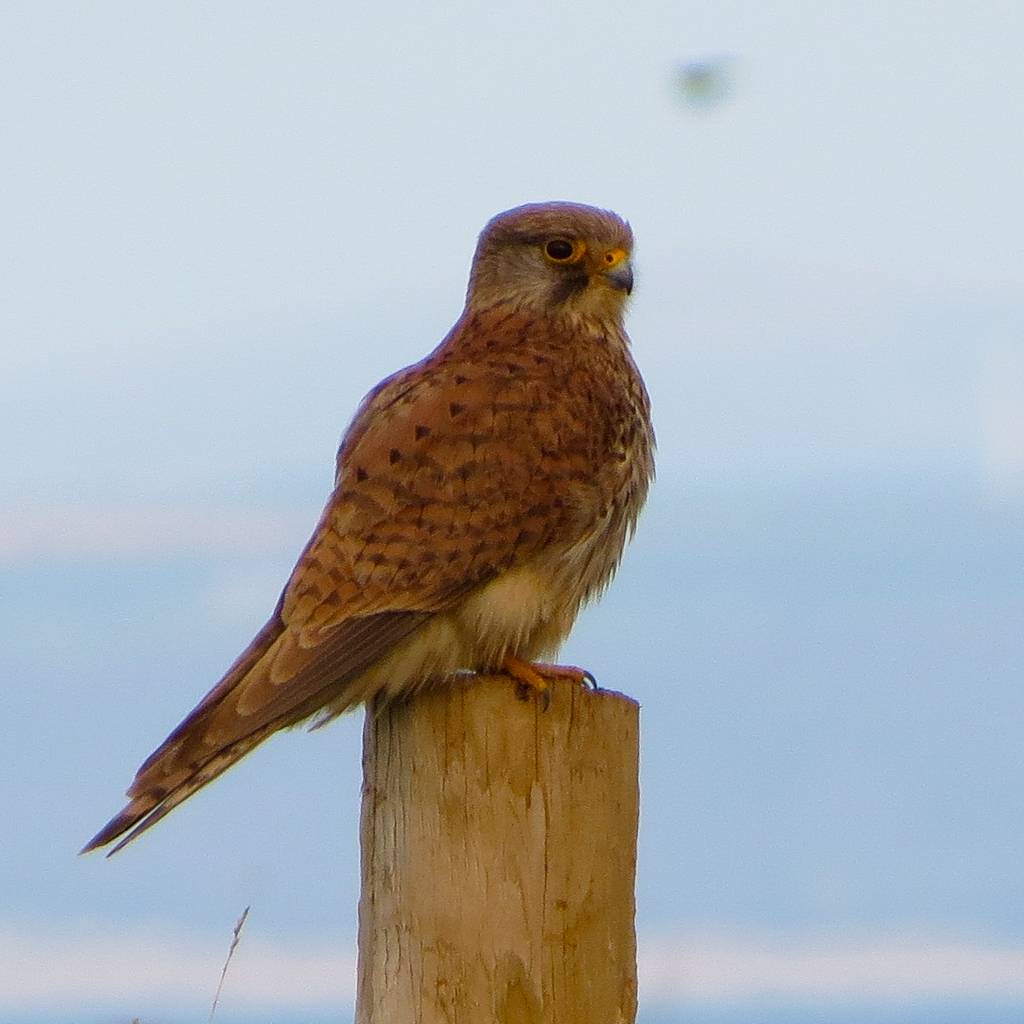
Bird surveys established that the airspace over the site had some use by commuting and foraging red kite, that kestrel predominantly used the heathland during the breeding season and autumn periods, and other raptors occurred more occasionally or for brief periods of the year. A population of red grouse was noted, and snipe held territory in a flushed area off-site. The passerine community was typical of the habitats present. Collision risk analysis established that predicted red kite collision was relatively low, but kestrel higher; measures to draw kestrel away from the proposed turbine locations included nest boxing remotely from the wind farm.
The site was subject to a detailed habitat survey during which all stands of vegetation were assigned to a National Vegetation Classification community type, and their condition assessed. BSG worked with Butterfly Conservation to devise a survey method for Silurian moth in conjunction with a way of ranking habitat suitability for the species. A habitat appraisal for reptiles was completed by a national expert, a number of ponds were surveyed for great crested newt (using eDNA and traditional techniques) and static bat detectors were used to establish the bat community of the site in accordance with industry standard guidance.
Surveys recorded no evidence of great crested newt, that common reptiles were present, and that there were low levels of use of the airspace by bats (including very low usage by horseshoe bats that are a feature of the Usk Bat Sites SAC). Off-site waterbodies were identified as being seasonally used by otter (to feed on spawning amphibians), but within the development area the streams were minor and were buffered through development design. Disturbance of otter and pollution / sedimentation issues were therefore addressed through primary (designed-in) standard mitigation, avoiding the need for a complex HRA. Silurian moth caterpillars were found in areas where bilberry occurred in conjunction with a substantial moss layer and were absent or rare in mature heather-dominated and rushy areas.
Biodiversity net benefit was to be achieved through a range of measures set out in the outline Habitat Management Plan. These included rotational cutting of the dry heath, feral tree (invasive conifer) removal, bracken control and pond creation. These measures set out to achieve greater structural diversity across the upland habitats benefiting Silurian moth, other heathland moths and butterflies, reptiles and red grouse. They were also intended to prevent the succession of the heathland to woodland through invasion by conifers and native scrub. It was proposed to develop them further through a detailed post consent Habitat Management Plan. The ambition was for local commoners to support the delivery of the management works, thereby ensuring effective custodianship of the common through local community involvement.
Outcome
A planning application for the wind farm was submitted to Planning and Environment Decisions Wales (PEDW) in October 2024. BSG then provided further information to the inspector in response to requests for further information during the determination process.
The wind farm was refused planning permission in March 2026. The reasons cited for refusal were impacts on cultural heritage and landscape features.
In relation to ecology and peat/ peatland habitats, the inspector concluded that the proposal would have a positive effect and attached a “moderate beneficial weight in favour of the proposed development to this consideration.”
Testimonial
“BSG has consistently provided high-quality ecological and ornithological support for the development of onshore wind farms. Their diverse team offers comprehensive assistance throughout the consenting process, including desktop analysis, on-site surveys, liaison with consultees, and the completion of Environmental Impact Assessments. BSG’s expertise and profound understanding of the broader biological landscape have been pivotal in navigating the planning system, especially in the preparation and lead-up to planning submissions.” Oliver Piper, Development Project Manager, RWE