



Overview
Lee Valley Regional Park Authority (LVRPA) proposed replacing the ageing Lee Valley Ice Centre with a new twin Olympic sized ice-pad facility. BSG Ecology worked closely with the project landscape architects to design an innovative scheme which aimed to deliver both biodiversity net gain and benefits to protected species. The new Ice Centre was opened in June 2023, and monitoring to determine whether biodiversity net gain targets will be achieved is ongoing. It is already clear, however, that the site supports scarce invertebrates, and the project has been the recipient of a London in Bloom Award for best biodiversity and innovation.
Challenge
The LVRPA wanted to ensure that the new Ice Centre provided significant enhancements for wildlife and achieve a high biodiversity net gain score onsite. This was a challenge as the site had limited options for habitat creation; the building footprint needed to increase and the existing baseline habitats on the wider site, which included large areas of woodland, scrub and grassland, were to be retained and were of relatively high ecological value.
The project needed to comply with planning policy, both at the national and local level including the National Planning Policy Framework (NPPF), the London Plan, and the London Borough of Waltham Forest Local Plan. To do this it needed to demonstrate a net gain in onsite habitats achieving measurable biodiversity net gain and undertaking Urban Greening Factor (UGF) assessments – both of which were relatively new requirements at the time, and necessitated considerable collaboration across the project team.
The project was also heavily scrutinized with a focus on preserving the land for nature and community use. There was some small local opposition to the project on the grounds of perceived loss of habitats and potential impacts on protected species.
Solution
BSG Ecology was commissioned by LDA Design on behalf of LVRPA to produce a robust Ecological Impact Assessment (EcIA) for the scheme. BSG Ecology also prepared a biodiversity net gain calculation, Biodiversity Impact Assessment Calculation report, UGF Assessment and a Habitat Management Plan which covered the construction and landscaping phase of the project.
BSG Ecology worked closely with LDA Design, and the project architects to achieve a high biodiversity net gain score onsite and create a space for people to access nature. Habitat creation and enhancements, and provision for species using the site and surrounding area include the following:
- Enhancement of existing retained grassland from an amenity grassland to a higher value wildflower meadow.
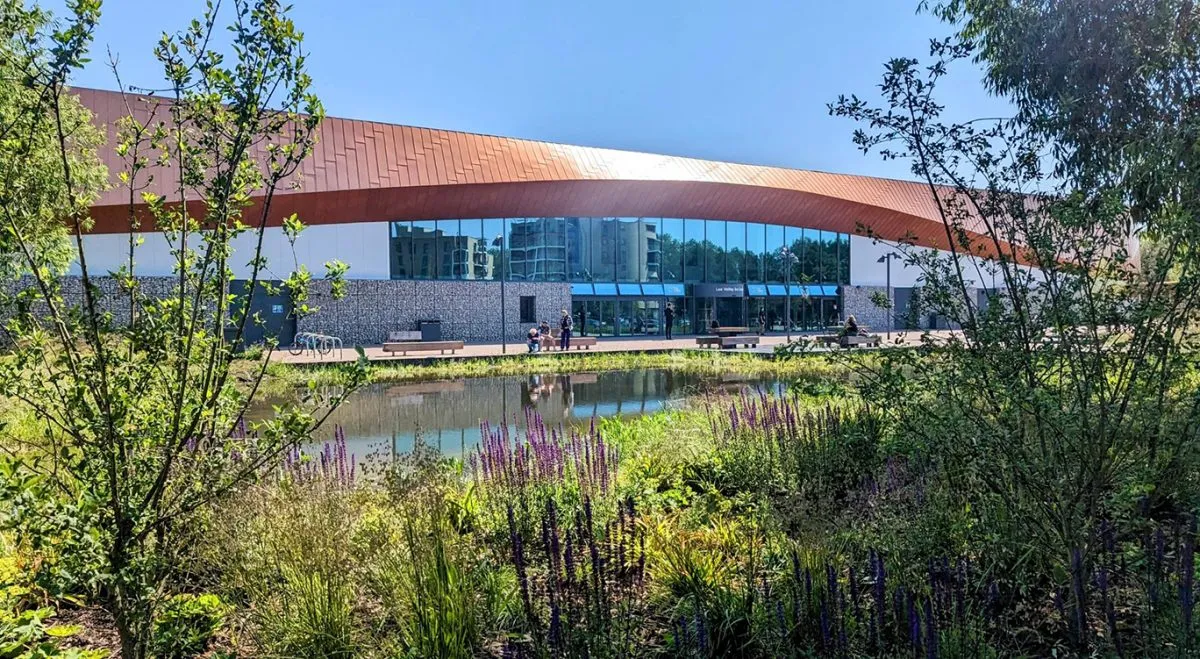
- Creation of an innovative wildlife friendly water feature supporting native bog and emergent plants and utilising recycled meltwater from the ice rink.
- Creation of swales in the former car park.
- Planting of 153 new native trees as well as new areas of scrub to enhance existing areas of woodland and create visual screening across the site.
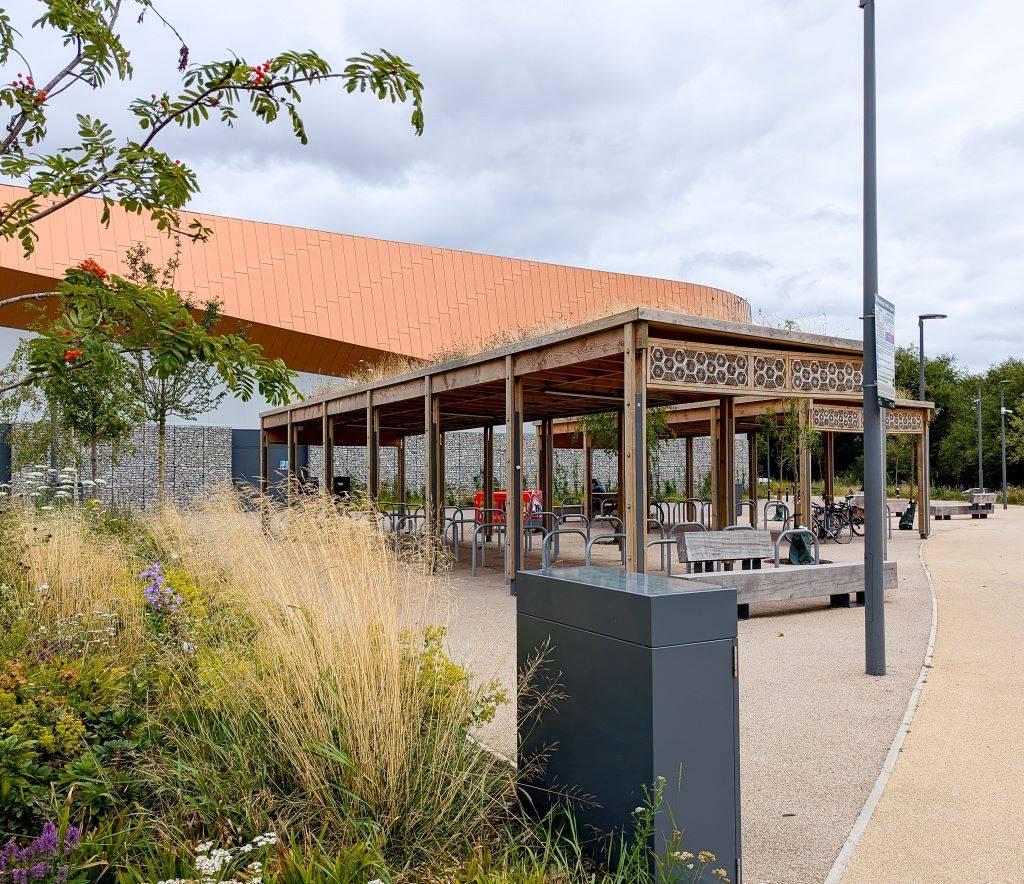
- Construction of planted gabion walls using existing site materials, providing varied micro-habitats for birds, bats, invertebrates, lower plants and lichens.
- Enhancements for hedgehogs (hedgehog houses and habitat piles), which were a key concern of a local interest group, invertebrates (provision of invertebrate hotels), and birds (including installation of integrated swift boxes).
- Protection and retention of a pipistrelle bat roost found in a willow tree onsite.
Members of the BSG Ecology project team attended regular meetings with the client and other stakeholders, to listen to any concerns about how the development might impact wildlife on the site. During these meetings, BSG staff set out plans for protecting and improving biodiversity at the site, detailed future landscape plans and proposed management, and addressed areas of particular concern including the safeguarding of hedgehogs and grass snake nesting areas.
BSG Ecology also provided ecological supervision during the construction phase to ensure that any ecological issues which might arise could be identified and dealt with proactively.
Outcome
The project was granted planning permission in Autum 2020 and opened to the public in June 2023.
The client’s ambition to achieve a high biodiversity gain onsite allowed for the creation of a number of innovative ecological enhancements. Following the project’s completion, the planted gabion walls and wildflower meadow are beginning to mature. Vegetation surrounding the water feature at the front of the new building has already been seen to support young grass snakes, and a recent visit from the Bumblebee Conservation Trust recorded the moss carder and brown banded carder bee on site, both of which are scare species in the UK.
The newly created and enhanced habitats will continue to be monitored to ensure that proposed habitat conditions outlined within the biodiversity net gain assessment are achieved or exceeded.
Some local interest groups who were initially sceptical of the potential impacts of the project on biodiversity have since been to visit the site and have provided positive feedback. The Lee Valley Ice Centre project was awarded a special London in Bloom award in 2023 for ‘Best Biodiversity and Environmental Innovation’ for its efforts to increase biodiversity through innovative methods, and the Waltham Forest Design Award for Best Landscape in 2024.
Testimonial
“BSG’s collaboration with the design team from the early stages of the project has been invaluable. They provided quality input throughout the design and delivery of the project from baseline surveys, planning reports, work method statements and Ecological Clerk of Works ensuring that the existing biodiversity on site was protected through to ensuring the emerging biodiversity net gain requirements were successfully delivered.”
Cath Patrick, Conservation Manager, Lee Valley Regional Park Authority
“The entire landscape design was pointed at enhancing the health and variety of ecosystems, drawing on research and local knowledge. The landscape and ecological enhancements provide an opportunity for the re-colonisation of typical marshland species, reconnecting us to the history of the place which a few hundred years ago used to be part of Broad Marshes.”
Joanna Asia Milewska, project lead for LVIC on behalf of LDA Design
———–
Photo Credit: Left and right images by LDA Design