


20 Nov What are the implications for development proposals of revised GOV.UK onshore wind farm guidance for England and Wales?

In an apparent response to the increase in wind farm development proposals in England, onshore wind farm guidance on the GOV.UK website has been substantially updated (November 2026). This updated guidance applies to both England and Wales. Previous GOV.UK guidance was high level and dated, and as a result consultants working in onshore wind have typically deferred to wide-ranging NatureScot guidance in recent years. NatureScot guidance, which includes detailed approaches to baseline survey, analytical processes (such as collision risk analysis) and methods of monitoring can be readily adapted to reflect ornithological interest features at sites in England and Wales.
The updates now mean that wind farm developers and their consultants need to consider both the GOV.UK guidance and the far wider-ranging and more detailed NatureScot guidance when planning their approach to ornithological work to inform a wind farm planning application in England and Wales.
What are the implications of the revised guidance for wind farm proposals?
Key aspects of the revised guidance include:
- Advice that wind farms should not be located within or close to statutory designated sites.
- An emphasis on the need to explore functional linkage between land within / close to proposed wind farm sites and Special Protection Areas (SPA) and other designated sites in the wider landscape. It is proposed that a perimeter area of 10 km is considered as standard. It is noted that further relevant guidance on connectivity with designated sites will be published in 2027.
- A relatively detailed section (in the context of the document) on desk study, indicating that bird records should be sought from an area extending up to 10 km from the wind farm (including any data from wind farm proposals within this area) and that a wide range of nature conservation organisations should be approached for data.
- A direction for early consultation with Natural England (NE) or Natural Resources Wales (NRW) in the event a site has the potential to harm the interest features of a designated site, could pose ‘significant risks to the environment’ or offers potential benefits for nature at scale.
- While there is signposting to NatureScot guidance on e.g. VP survey methods and long-standing RSPB (Gilbert et al., 1998) methods for other elements of survey work, the guidance introduces the need to complete walkover breeding and wintering bird surveys in accordance with the Bird Survey Guidelines. The guidance notes in this context that the methods of bird survey recommended represent the “Minimum protocol for assessing impacts.”
- At least 2 years of survey will be an expectation, with proposals to limit survey to a single year (or less than two full years) requiring consultation with NE / NRW to agree.
- Survey for curlew should extend to 800 m beyond the footprint of the proposed development and generic breeding and non-breeding survey work to 600 m.
- A 98% avoidance rate can be applied in Collision Risk Modelling for any species for which NatureScot do not have published avoidance rates (a consistent position with NatureScot).
Viewpoint
The main practical implications of the guidance for proposed wind farm development in England and Wales are the adoption of the Bird Survey Guidelines, which is a departure from NatureScot guidance, and the direction to secure bird data from 10 km around proposed wind farms.
Some thoughts on the guidance are below:
- The advice on designated sites is very black and white and could be more qualified. Selection of viable wind farm sites is already very heavily constrained by considerations that include landscape designations, cultural heritage assets, noise and topography (in addition to more potentially ‘solvable’ factors such as grid capacity). Clearly avoidance of direct impacts on statutory designated sites is both desirable and sensible (if a developer would like to gain planning permission). However, many wind farm sites and proposed developments in Wales (for example) are necessarily relatively close to upland SPAs (and component SSSIs), including sites in Strategic Search Areas which have been previously assessed as suitable for wind farm development. These projects still need to assess impacts, but as recent BTO / BSG Ecology led reviews have indicated, some feature species (such as red kite) are very unlikely to experience population level effects even in the event of significant further wind farm development. It should also be appreciated that a Site of Special Scientific Interest notified for e.g. its woodland passerine assemblage or high density of nightingales breeding in scrub is inherently unlikely to be impacted by a wind farm close to it. The effect pathway is difficult to see. Finally, empirical evidence has established that some species / species groups show very high rates of collision avoidance. It follows that, while the sentiment of siting wind farms away from designated sites is a sensible one, a little more nuance might be advisable.
- The direction on functional linkage, including the data search area of ‘up to 10 km’, is generally helpful. However, some species, particularly swans and geese, will regularly range further than 10 km so could be affected at greater distances. Where applicable Impact Risk Zone maps should be sought from Natural England to explore the issue further.
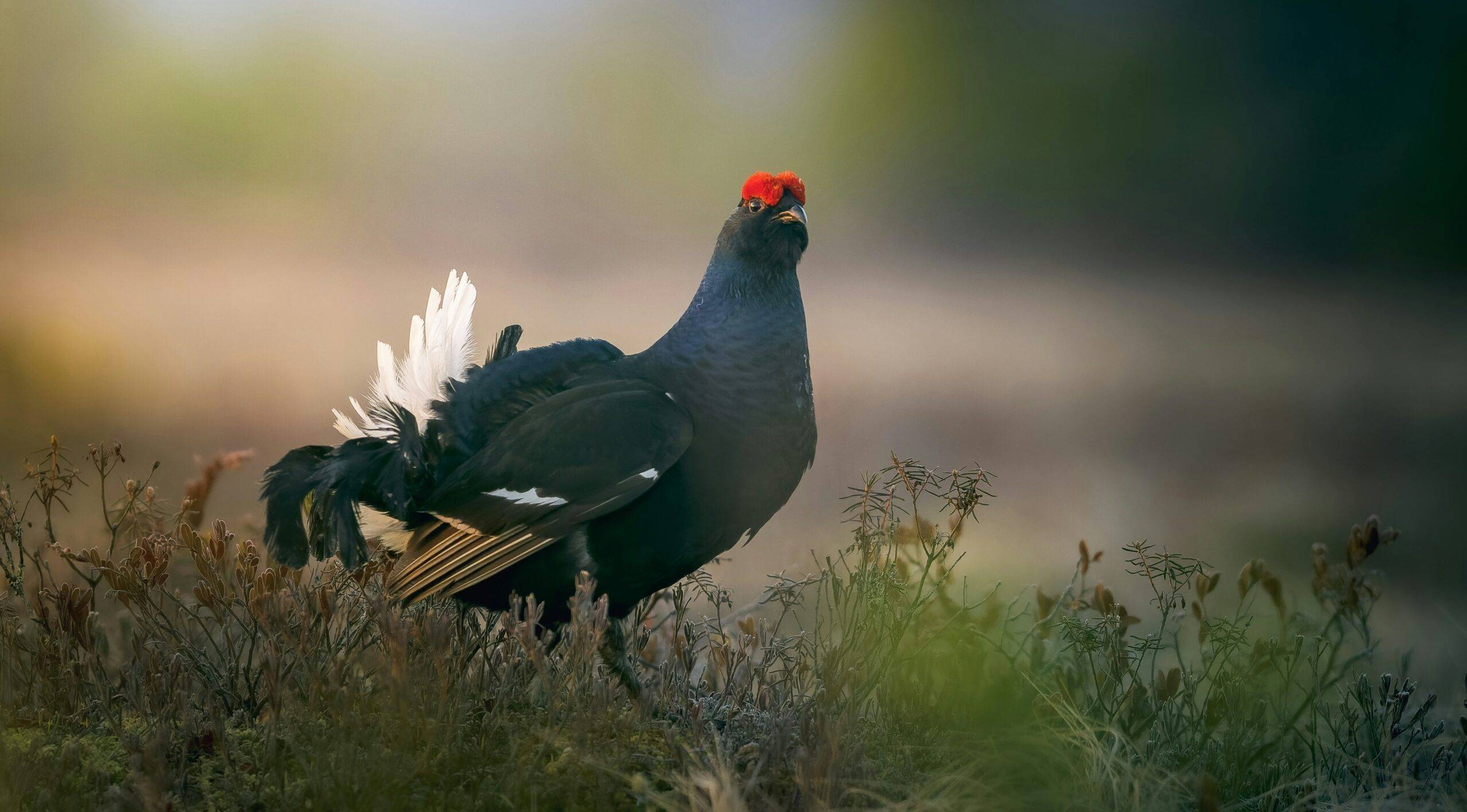
- There seems to be a slight disconnect between the EIA process and the guidance. As an industry we have spent in excess of 25 years finding no population level impacts on passerines as a result of wind farm operation. NatureScot guidance therefore recommends breeding bird survey for wind farms focusses on raptors and waders alongside species-specific work (e.g. for black grouse within their geographical range). However, through aligning with the Bird Survey Guidelines the guidance is effectively recommending two years of generic six visit survey to ‘inform impact assessment’. For many sites this will effectively amount to mapping passerine territories. Achieving legislative compliance and identifying opportunities for habitat management for birds might benefit from this sort of generic breeding bird survey (possibly as a planning condition) but linking it to impact assessment is unhelpful and feels quite a retrograde step. Iterations of NatureScot guidance have moved away from recommending generic (passerine-focussed) survey on the basis of lack of evidence of impacts. It should also be noted that wind farm sites in Wales are often larger than sites in England: 20 km2 of Molinia dominated moorland with a predictable passerine community is a very different prospect from a 4-5 turbine site in arable land in Fenland or the East Riding. This does invite the question as to whether there has been Welsh input to this?
- The advice to consult NE and NRW in various circumstances that would be applicable to most wind farm sites appears more practical in England than Wales. While experience is that meetings can be achieved with NE to discuss ornithological issues, in Wales the Discretionary Planning Advice Service (DPAS) is critically under resourced. When meetings can be secured with either NE or NRW ornithologists they are typically very helpful; however, NRW ornithological staff are spread too thinly to be able to service DPAS and most (at least 75% in our experience) meeting requests cannot be accommodated. This is a long-running issue. It follows that there can be no confidence that the meetings suggested by guidance can be secured unless there is a clear commitment for NRW’s ornithological team to be better supported.
- The guidance is also silent on various points that it would have been straightforward to comment on. For example, is one year of data collection generally suitable to inform repowering? Many Welsh and some English schemes are due for repowering, and it would be useful to know whether NE and NRW follow NatureScot on this in accepting one year of work. Also, where there were previous departures from NatureScot guidance, in terms of extent of viewsheds from vantage-points (VP) and duration of VP watches recommended for England, does the silence on this mean that the 2 km effective viewing distances and three-hour VP durations (as opposed to 1 km and 2 hours in England) can now be assumed? The NatureScot protocols have never been questioned in Wales in our experience.
- The clarity around breeding curlew, survey distances around infrastructure and confirmation of acceptable default avoidance rates in the absence of empirical data are welcome.
In conclusion the updated guidance continues to defer to wide-ranging NatureScot survey, assessment and monitoring protocols, with the principal departure in bird survey terms being the adoption of the Bird Survey Guidelines. This will result in more expense for developers and additional data sets that will not be particularly material to impact assessment. NatureScot guidance had long moved on from this.
More positively, there are some useful clarifications of expectations regarding survey distances and avoidance rates, and a clear indication that functional linkage is very high on the list of ornithological considerations for new wind farm proposals.
If you require assistance with ornithological survey or assessment with regard to an onshore wind farm or mixed renewables project, please get in touch with Owain Gabb (o.gabb@bsg-ecology.com). BSG have worked on wind farms throughout the UK for over 20 years, and have demonstrable experience in the design of innovative mitigation, research and monitoring to avoid and understand impacts on bird populations.
Recent schemes BSG has been involved in include Alwen Forest wind farm and Mynydd Maen wind farm which are entering the construction phase and awaiting determination respectively.