


Overview
BSG Ecology were commissioned by LDA Design and Statkraft to provide ecological support for a proposed solar scheme in North Somerset. The biodiversity strategy for the project needed to deliver a demonstrable increase in the value of the site for horseshoe bats, alongside achieving an additional 10% Biodiversity Net Gain. Multiple scenarios were assessed using DEFRA’s BNG calculator and a parallel calculator for bat habitat to design a strategy that satisfied both requirements and received planning consent.
Challenge
The site is located 1.3 km south of the North Somerset and Mendip Bats Special Area of Conservation (SAC) and falls within a zone that is functionally linked to the designated site, providing foraging habitat for greater and lesser horseshoe bats Rhinolophus ferrumequinum and R. hipposideros. These species roost within caves within the SAC, and forage in the surrounding landscape. Both species were recorded foraging at the site during surveys in 2023.
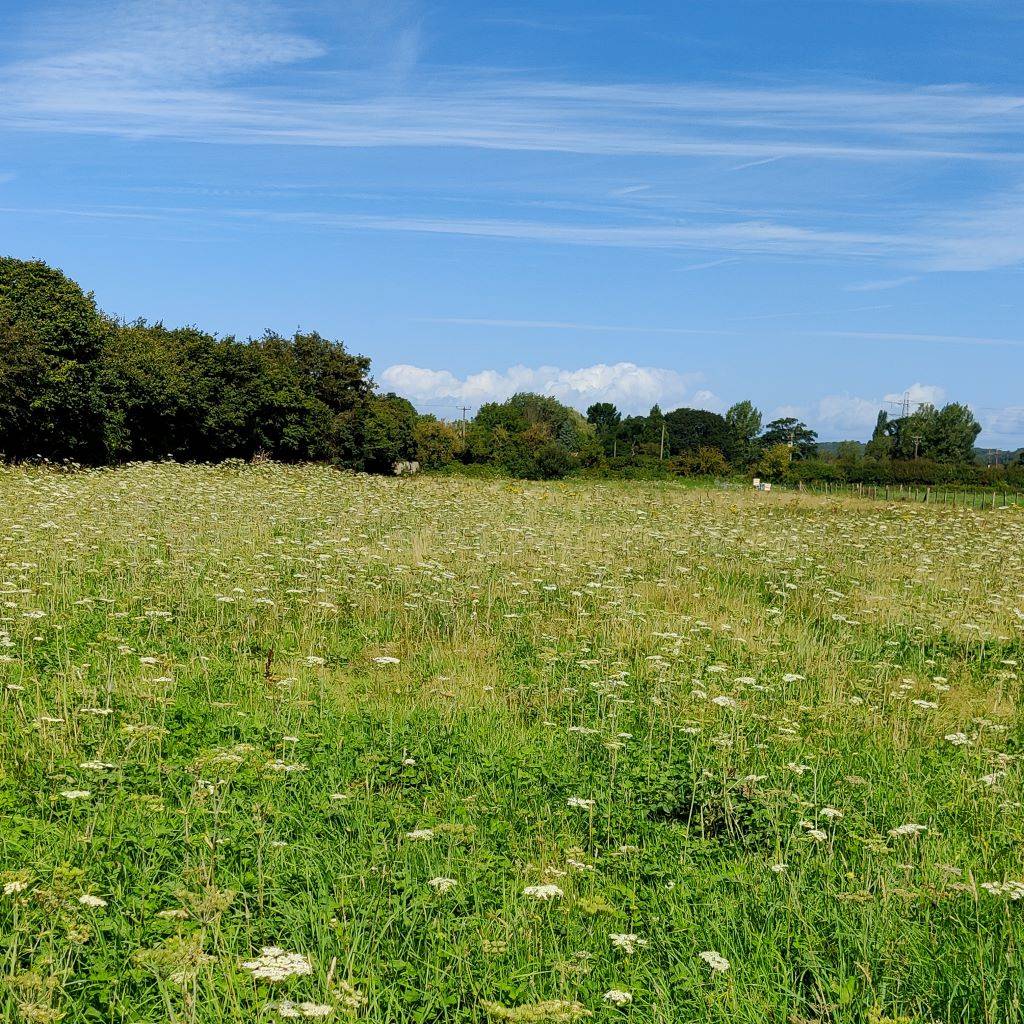
Survey work established that the site was dominated by cattle-grazed pasture land. Dung beetles associated with grazing animals are an important source of prey for horseshoe bats. Pasture habitats are botanically species-poor, however, and are of low value in biodiversity net gain terms.
The client wanted to ensure the project achieved a high biodiversity net gain score, while maintaining favourable conservation status of the nearby SAC was a necessity if the project was to achieve planning consent. Local planning policy required the value of the site for horseshoe bats to be quantified, and no net decrease in this value post-development. This was a challenge as there was a trade-off between losing cattle pasture, resulting in a high biodiversity net gain score but reducing the value of the site for horseshoe bats, and retaining this habitat, which benefitted horseshoe bats to the detriment of biodiversity net gain.
Solution
BSG Ecology worked closely with LDA Design to develop the overall habitat creation and enhancement strategy for the site. Throughout the design evolution process, multiple scenarios were proposed, and each was assessed using the DEFRA biodiversity net gain calculator. The value of the site to horseshoe bats under each of these scenarios was also calculated, using a separate ‘Habitat Evaluation Procedure’ (HEP) calculator, originally developed by Somerset Council and approved for use by Natural England. The parallel use of these two calculators ensured that the biodiversity strategy represented a net gain in the value of the site for horseshoe bats, in addition to achieving a high biodiversity net gain score. The final design proposed a suite of enhancement measures specifically targeted at horseshoe bats in a large field formerly occupied by arable. This included:
- Over two kilometres of new hedgerow;
- Establishment of a mosaic of rough grassland, woodland, and a wetland scrape;
- Over four hectares of broad-leaved woodland;
- The subdivision of the centre of the field into five smaller, cattle-grazed fields;
- Weatherproof livestock shelters in cattle grazed fields to contain in-built hotboxes, providing feeding perches and night-roosts for horseshoe bats.
Biodiversity enhancements throughout the rest of the site are to include:
- Enhancement of the condition of retained grassland within solar panelled fields by a reduction in grazing intensity and over-seeding with a wildflower mix;
- Creation of buffer strips of tussocky grassland throughout field margins across the site, providing important edge habitats
- The creation of four new ponds
- Broad-leaved woodland and hedgerow creation
- The provision of hedgehog hibernacula, bee houses for native solitary bees, and bat and bird boxes throughout the site.
Outcome
The final habitat creation and enhancement proposals for the project achieved a biodiversity net gain of 59%, and a net gain in the value of habitats at the site for horseshoe bats, helping ensure the favourable conservation status of the North Somerset and Mendip Bats SAC will be maintained. The development received planning consent in December 2024.
Testimonial
“From the outset, BSG Ecology’s expertise was critical not only in terms of meeting the extensive survey requirements for the site, but also in shaping the design of the scheme. The advice provided with regard to habitat mitigation for greater and lesser horseshoe bats was fundamental to achieving planning permission. The delivery of the extensive habitat creation measures will achieve a significant uplift in biodiversity across the site and leave a positive legacy beyond the operational life of the solar farm.”
Ed Salter, Principal Consultant, LDA Design